Studio Equipment Rental in Lagos: What’s Actually Worth Renting vs Owning
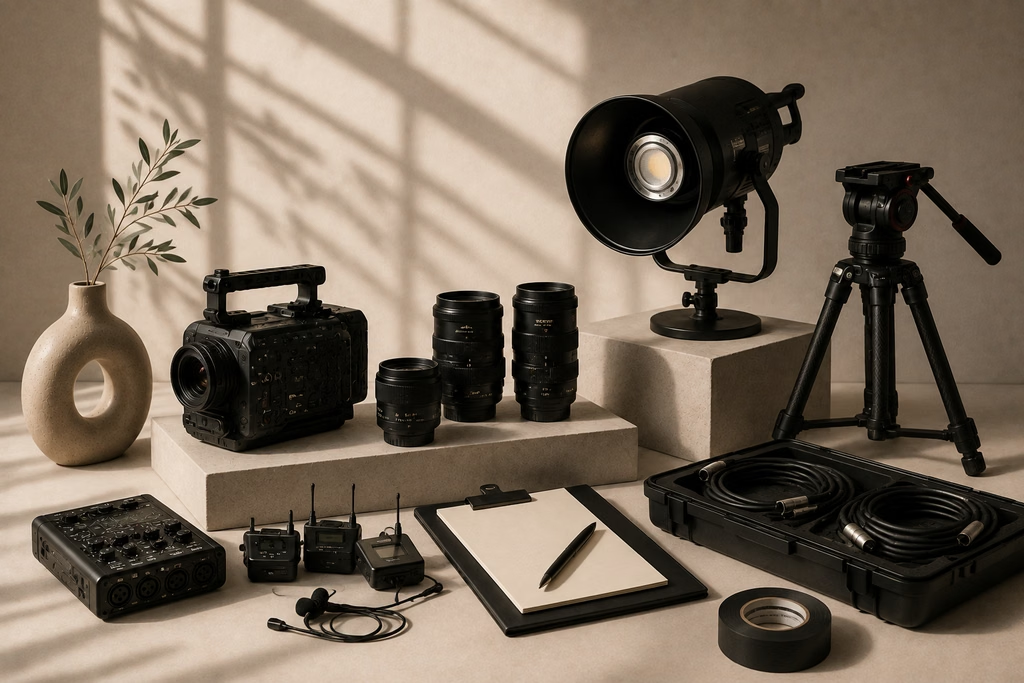
Every production company in Lagos owns something it uses twice a year. Usually it was bought during a project that paid well, and it has been depreciating in a cupboard ever since.
The rent-or-own decision is arithmetic, not instinct. Divide the purchase price by the day rate and you get the number of shoot days at which owning starts to win. Then ask honestly how many days you actually shot with that item last year.
Key takeaways
- Divide purchase price by day rate to find your break-even in shoot days. Most gear never reaches it.
- Own what you touch every week. Send everything else to studio equipment rental as a specific job requires it.
- Import costs and FX movement make ownership riskier in Nigeria than the same decision would be in London or New York.
- Racks, cases, and stands are the unglamorous purchases that pay for themselves fastest.
- Used gear is worth buying in some categories and dangerous in others.
- A studio equipment rental agreement should name insurance, damage liability, and pickup times in writing.
The break-even question
Studio equipment rental wins whenever your utilization stays below the break-even day count.
The math is simple and most people avoid doing it. If an item costs the equivalent of thirty day rates, you need thirty shoot days with it before ownership breaks even, and that is before you account for repairs, storage, insurance, and the fact that it will be superseded.
Three numbers decide it:
- Purchase price, landed, including duty and clearing
- Day rate from a studio equipment rental provider you would actually use
- Realistic annual usage, taken from last year’s calendar rather than from optimism
Then adjust for two things the arithmetic misses. Owned gear ties up capital you could have spent on marketing or staff. Gear from a studio equipment rental house arrives serviced, calibrated, and replaceable if it fails mid-shoot.
What is worth owning
Own the things you cannot work without and would notice missing on a Tuesday. Everything else is a studio equipment rental line in a project budget.
- Your primary camera body. If you shoot weekly, this crosses break-even fast.
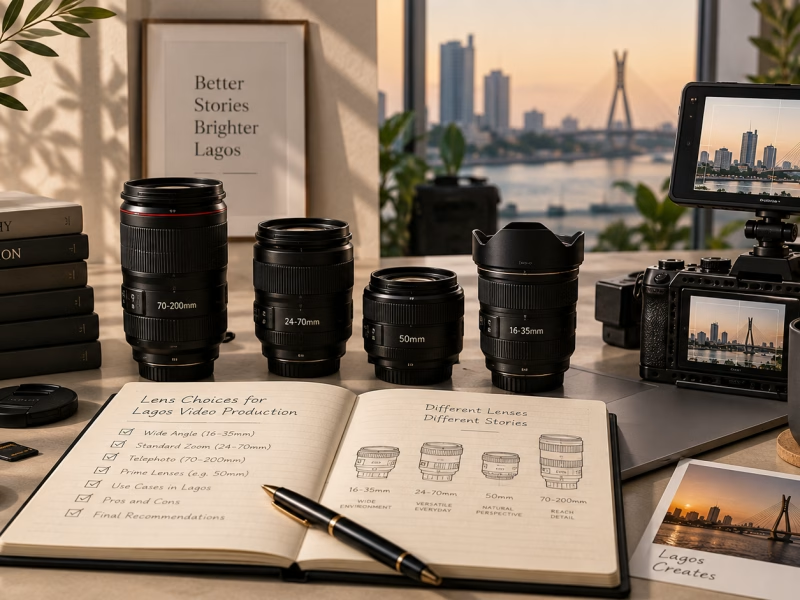
- One or two lenses you use on most jobs. Not the whole range.
- Basic audio. Microphones hold value and rarely become obsolete.
- Monitoring. Headphones and a reference monitor.
- Stands, sandbags, and clamps. Cheap, constantly needed, and nobody rents them out gladly.
- Storage and backup. Never rent the thing your footage lives on.
The pattern is that ownership makes sense for items with high usage and low obsolescence. Camera bodies are the exception at the margin, because they date faster than anything else on the list.
What is worth renting
Send anything specialized, heavy, or format-specific to studio equipment rental.
| Category | Rent or own | Why |
|---|---|---|
| Specialist lenses | Rent | High cost, occasional use, and the lens you need changes per job |
| Large lighting | Rent | Bulky, fragile, and job-dependent |
| Second and third camera bodies | Rent | Only needed on multi-cam days |
| Gimbals and stabilizers | Rent | Fast product cycles, occasional use |
| Grip and rigging | Own the basics, rent the rest | Daily items are cheap, specialist rigging is not |
| Drones | Rent | Regulatory and insurance overhead |
A stabilizer is the clearest example. The DJI RS 5 carries a three-kilogram payload with roughly fourteen hours of standby time and a one-hour charge, according to DJI’s published specifications. It is excellent, and most production companies use one on perhaps a dozen days a year. That is a textbook studio gear rental case rather than a purchase.
The same logic covers lighting above a certain size and most camera bodies beyond your first. Both categories move fast enough that a studio equipment rental line is usually cheaper than absorbing the depreciation yourself.
What makes the decision different in Lagos
Three local factors push the studio equipment rental case further than it goes elsewhere.
Currency movement is the first. Most professional gear is imported and priced in dollars, and the naira rate against the dollar is published daily by the Central Bank of Nigeria. A purchase decision costed three months ago may not hold today, which raises the value of studio equipment rental as a way of avoiding a large one-time commitment at an unpredictable rate.
Import and clearing is the second. Landed cost is not sticker price. Duty, clearing, and freight all sit on top, and they land unevenly depending on how an item is classified.
Service is the third. When a body fails in Lagos, the repair path is usually a trip abroad or a long wait. Studio equipment rental transfers that risk to somebody whose business is absorbing it. A studio gear rental house replaces a failed unit the same day because it holds spares. You do not.
None of this makes ownership wrong. It means the break-even number needs to be higher in Lagos than the equivalent calculation in a market with local service centers and stable pricing.
Racks, cases, and the unglamorous purchases
The items nobody photographs are the ones that pay back fastest, and none of them belong on a studio equipment rental invoice.
A studio equipment rack is not exciting and it will outlast three camera bodies. Rack-mounted gear stays wired, stays dust-free, and stays where you left it, which removes the setup time that quietly eats studio days.
What belongs in a studio equipment rack:
- Interfaces, preamps, and patch bays
- Power conditioning and distribution
- Recorders and network hardware
- Anything with a permanent cable run
Studio gear rack mount hardware is cheap relative to what it protects. If a unit ships with rack ears, use them, because a studio gear rack mount install prevents the slow damage that comes from stacking equipment on a desk and moving it weekly.
The same logic applies to cases and grip stands. Both are low-cost, high-frequency, and almost never worth renting.
Podcast production studio rental versus building a room
Booking a room is usually cheaper than building one until you are recording weekly, which makes this the clearest studio equipment rental case of all.
Podcast production studio rental gives you a treated room, a working desk, and someone who knows the signal chain. That is worth a lot on episode one, when the alternative is discovering room reverb in the edit.
Build your own once three things are true: you record at least weekly, you have a room you can treat, and you need to control the schedule rather than book around someone else’s.
Whichever route you take, the delivery target does not change. Apple recommends podcast audio around -16 dB LKFS with true peak no higher than -1 dB FS, per its audio requirements. A rented room that hits that reliably beats an owned room that does not.
Podcast production studio rental also works as a test. Book four sessions before committing to a build, and you will know what your format actually needs from a room.
Buying used
Some categories hold up secondhand. Others hide expensive faults, and those are the ones to keep on studio equipment rental instead.
Reasonable used buys:
- Microphones, especially dynamics with no active electronics
- Stands, clamps, and grip hardware
- Cases and racks
- Manual lenses, once you have checked the glass and the aperture ring
Risky used buys:
- Camera bodies, where shutter count and sensor condition are hard to verify
- Batteries, which degrade invisibly
- Gimbals, where motor wear is not obvious until a shoot
- Anything with a fan, since bearings fail quietly
Searches for used studio gear near me mostly surface marketplace listings rather than dealers, which means no warranty and no return path. If you buy that way, test everything before payment and treat a seller who resists a test as a seller with something to hide. The used studio gear near me route is fine for stands and cables and poor for anything with a sensor in it.
A studio equipment store near me search has the same problem in reverse. Physical stores in Lagos carry limited stock, so the item you find is often the item they have rather than the item you need. Use a studio equipment store near me for consumables and accessories, and use rental or a specialist importer for the main pieces.
What to check before you sign a rental
Read the damage clause in any studio equipment rental agreement before you read the price.
- Insurance. Who carries it, and does yours cover rented equipment
- Damage liability. Excess amount, and what counts as fair wear
- Pickup and return windows. Late returns usually bill a full extra day
- Testing time. Whether you can check the kit before leaving
- Replacement policy. What happens if a unit fails mid-shoot
- Deposit terms. Amount, and how quickly it comes back
Any studio equipment for rent from a serious house comes with answers to all six in writing. If a supplier is vague about the damage excess, that is the conversation to finish before you load anything into a vehicle.
Also check what is included. A body listed as studio equipment for rent may or may not come with batteries, cards, and a charger, and discovering that on set costs a morning.
How rental works with us
Our studio equipment rental catalog is the gear we shoot with ourselves, so it goes out tested and complete.
Our rental catalog covers cameras, lenses, lighting, grip, and audio by the day. Kits go out checked, with batteries charged and cards formatted, because we shoot with the same equipment on our own productions.
Studio gear hire also works as a trial. Teams weighing a purchase often book the item for two days first, which is a cheaper way to answer the question than buying and reselling at a loss. Studio gear hire for a format test tells you more than any spec sheet will.
If you would rather hand the whole thing over, we also crew and produce, which removes the equipment question entirely.
Frequently asked questions
How many shoot days justify buying instead of renting?
Divide landed purchase price by the day rate, then add a margin for repair and obsolescence. If the number is higher than your realistic annual usage, keep renting.
Is studio equipment rental cheaper over a year?
For occasional-use items, almost always. For daily-use items, almost never. The category matters more than the total, which is why a blanket policy in either direction costs money.
What should I never rent?
Storage and backup drives. Your footage should live on hardware you control, and drives are cheap relative to the cost of losing a shoot.
Do I need insurance to rent?
Most rental houses require it or charge a damage waiver. Check whether your existing business policy extends to equipment in your care, since many do not by default.
Does 4K delivery change what I need to rent?
Sometimes. Check the delivery spec first, since YouTube’s upload guidance recommends roughly 8 Mbps for 1080p at 30fps, and plenty of client deliverables never exceed 1080p. Renting a 4K body for a 1080p deliverable is a common overspend.
Can I rent for a multi-day shoot at a better rate?
Usually yes. Most houses discount beyond a certain number of days, so ask rather than booking single days back to back.
Working out your own answer
Pull last year’s calendar and count the days you actually used each major item. Most teams find two or three purchases that never came close to break-even and one or two studio equipment rental lines they should have bought outright.
Do that count once a year rather than once. Usage patterns shift as formats change, and an item that justified itself last year can quietly stop earning its place.
If you want to check a specific item against a day rate before deciding, send us the list and we will quote it, whether you end up renting from us or not.