Studio Equipment Price: A Realistic 2026 Budget Guide
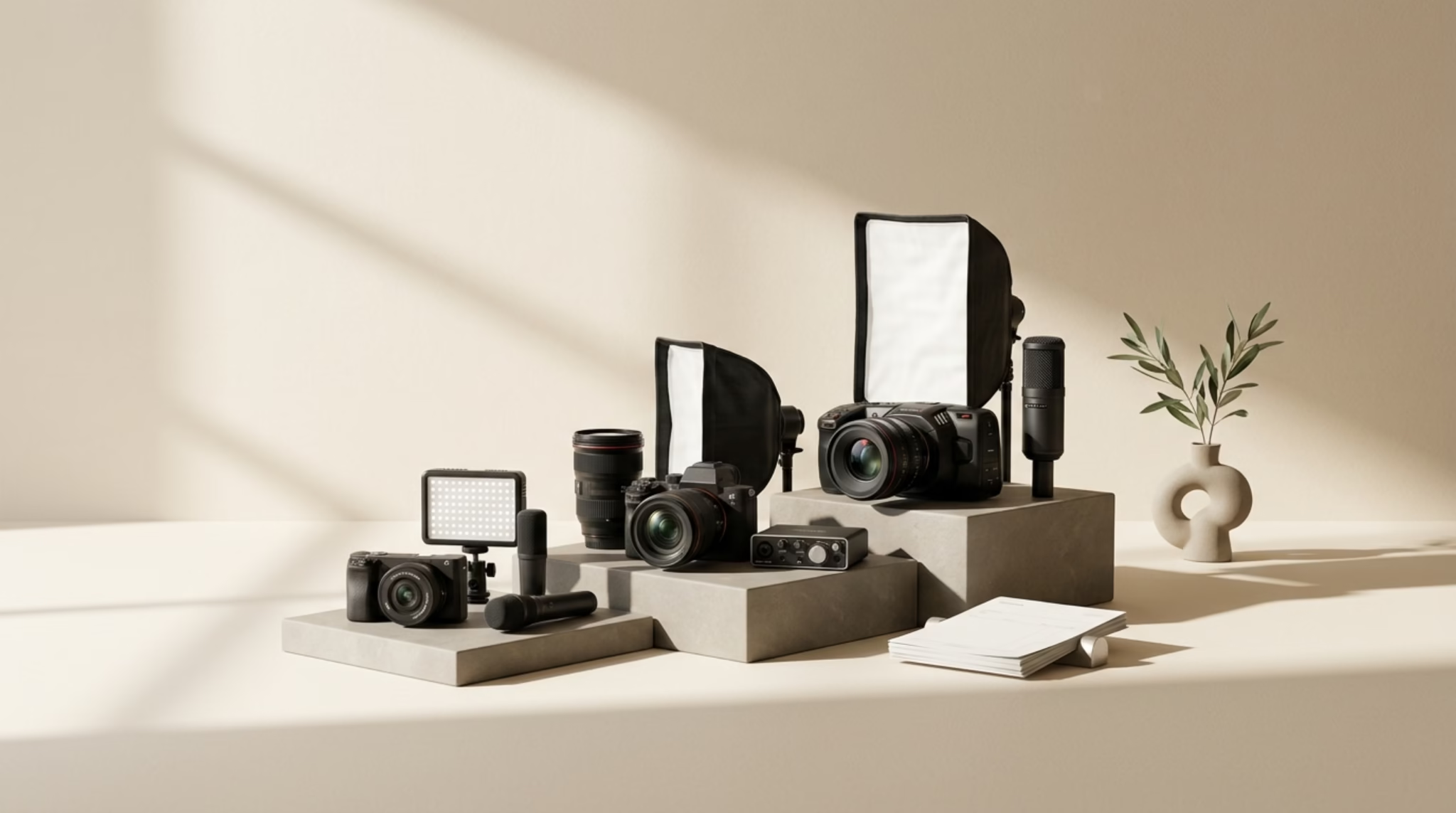
Studio equipment price varies so widely by category that a single number is almost useless without knowing what it actually includes. Lighting, audio, camera, and support gear each follow their own price logic, and a realistic budget has to account for all four separately rather than one combined guess. This guide breaks studio equipment price down by category, gives honest ranges instead of a single misleading figure, and covers when renting makes more financial sense than buying outright.
- Lighting: usually the most affordable entry point into a real studio setup.
- Audio: smaller line item than most people expect, but easy to underspend on.
- Camera and lens: typically the single largest expense in a full studio equipment price total.
- Support gear: tripods, stands, and backdrops add up faster than most budgets plan for.
What Actually Makes Up A Studio Equipment Price Total?
A realistic studio equipment price total breaks into four categories that rarely get budgeted with equal care: lighting, audio, camera, and support gear. Most first time buyers overspend on camera bodies and underspend on lighting and audio, which is backwards from how viewers actually judge production quality.
The Godox S100W is a good example of where lighting budgets should start: a continuous LED light built for video work, priced well below the point where lighting quality stops improving noticeably with every extra dollar spent.
Mastermind CC’s rent gear catalog lists day rate pricing across every category covered in this guide, which makes it easy to compare a purchase price against a rental cost side by side before committing either way.
Mastermind CC’s studio and gear rentals service pairs gear recommendations with actual budget constraints, rather than pushing whatever generates the highest sale regardless of what a given project actually needs.
Is Studio Equipment Rental A Better Starting Point Than Buying?
Studio equipment rental almost always makes more sense than buying for a first project, since it reveals which specific gear actually gets used before any money goes toward permanent ownership. Studio gear rental also removes the storage, maintenance, and eventual resale problem that ownership quietly adds to every purchase.
Mastermind CC structures its rental catalog around exactly this decision point, and the full range of Mastermind CC’s services reflects how differently a one time shoot and an ongoing weekly production actually need to be budgeted.
Mastermind CC’s background as a gear access company as much as a studio shapes this advice directly, since the company sees firsthand which purchases new clients regret within the first few months of ownership.
Real project work confirms the pattern. Mastermind CC’s project archive and its DevFest Lagos coverage both relied on a mix of owned and rented gear, matched to what each specific job actually required rather than a fixed permanent kit used identically every time.
Live events make rental logic especially clear. Mastermind CC’s events and live production service rents specialty gear for one-off bookings rather than carrying equipment that would sit unused between events, the same math that applies to any individual building a first studio setup.
Studio Equipment Full Set Price: A Realistic Range By Category
Studio equipment full set price estimates online vary wildly because they rarely specify what quality tier they are describing. The table below breaks a realistic starter setup into categories with honest, rounded ranges rather than one misleading total.
Studio Equipment Price By Category (Entry-Level Starter Setup)
| Category | Typical Entry Range | What It Covers |
| Camera body | Largest single expense | Hybrid mirrorless body suitable for photo and video |
| Lighting | Lowest entry cost | One to two continuous LED lights, stands, modifiers |
| Audio | Often underspent | Shotgun or lavalier mic, basic audio interface |
| Support gear | Adds up gradually | Tripod, backdrop stand, cables, memory cards |
A useful way to think about studio equipment full set price is proportional, not absolute:
- Camera and lens: typically the largest single share of a full budget.
- Lighting: a meaningful but smaller share, with strong returns per dollar spent.
- Audio: a small dollar share that has an outsized effect on perceived quality.
- Support gear: individually cheap items that become a real line item once totaled.
Studio Gear Checklist: What Belongs On A Studio Equipment List PDF
A studio equipment list PDF is genuinely useful for tracking a build out, and the checklist below covers what most complete starter setups actually include, organized the same way a real shopping list should be structured. Print or save this list as a starting point before pricing out an actual purchase or rental order.
- Camera body: one hybrid photo and video capable body.
- Lens: at minimum one versatile zoom or prime lens.
- Key light: one continuous LED or strobe light with a stand.
- Fill light: a second light or reflector to soften shadows.
- Microphone: shotgun or lavalier, matched to the format being shot.
- Audio interface: needed if the microphone is not a USB model.
- Tripod: rated for the actual weight of the camera and lens combination.
- Backdrop and stand: even a simple seamless paper or fabric setup.
- Memory cards and cables: at least one full backup set for every shoot.
- Storage drive: for backing up footage the same day it is shot.
Used Studio Gear Near Me: Where The Real Savings Are
A used studio gear near me search can meaningfully lower a studio equipment price total, especially on items that hold up well used, without the same depreciation risk that camera bodies carry. Not every category is equally safe to buy used, which is worth knowing before searching.
- Good candidates for used: tripods, stands, backdrops, and light modifiers.
- Riskier used purchases: camera bodies with unknown shutter counts, batteries, and anything with a rechargeable cell.
- Always test before buying: power on every electronic item and check for physical damage in person when possible.
Studio Equipment Store Near Me Vs. Studio Gear Rental: Which To Search For First
A studio equipment store near me search assumes buying is the goal, while a studio gear rental search assumes access is the goal, and most first time buyers actually want the second thing without realizing it. Reframing the search this way before spending anything often changes the entire budget conversation.
Federal wage data for closely related production roles reflects how much skilled labor factors into a finished production, a reminder that gear alone, however well chosen, is only one part of what a studio equipment price budget is actually paying for.
Studio Equipment Pictures: Why Specs Matter More Than Photos Alone
Studio equipment pictures help with recognition, but specifications tell the real story a photo alone cannot, since two lights that look nearly identical in a product image can have very different output and color accuracy. Checking the actual spec sheet before comparing studio equipment pictures across listings avoids a purchase based purely on appearance.
Godox’s own product documentation lists exact output, color temperature, and CRI ratings alongside product photos, the kind of detail that actually predicts real world performance far better than an image alone ever could.
Studio Gear Beyond The Camera: The Line Items People Forget
Studio gear beyond the camera body is where most first time budgets quietly run over, since tripods, stands, cables, and backup drives rarely get costed out individually before a purchase begins. A properly rated tripod alone can represent a meaningful share of a lighting budget once quality and load capacity are actually accounted for.
The international standard for camera mounting threads defines the exact specifications tripod and camera manufacturers follow, which is why a properly rated tripod matters regardless of brand, and why a cheap, under-rated one is a genuine safety and equipment risk, not just a budget shortcut.
Elevated or rigged lighting setups carry their own safety layer. OSHA’s powered platforms and equipment guidance reinforces why stands and rigging need to be properly rated and secured, a cost that belongs in the budget even though it rarely appears on a typical shopping list.
Audio Gear: The Category Most Studio Equipment Price Guides Undersell
Audio gear deserves a bigger share of attention than most studio equipment price guides give it, since viewers tolerate soft video far better than they tolerate distorted or muffled sound. A modest, correctly chosen microphone consistently outperforms an expensive camera paired with poor audio.
Industry standards for audio equipment reflect why consistent signal quality matters as much as it does, since a properly gained, clean audio signal is the foundation every other post production step depends on, regardless of how much was spent on the camera capturing the picture.
A Simple Way To Sequence A Studio Equipment Price Budget
Sequencing a purchase in the right order matters as much as the total budget itself, since buying in the wrong order often means replacing something within the first year. The order below reflects what actually gets used every single shoot, not what looks most exciting to buy first.
- First: audio and a basic light, since both affect every single project regardless of format.
- Second: a properly rated tripod, since a wobbling shot undermines everything else purchased.
- Third: a second light for fill, once the primary setup is proven to be used consistently.
- Fourth: camera body upgrades, once format and workflow needs are actually clear.
Signs It’s Time To Stop Renting And Start Buying
Rental makes sense as a default starting point, but certain patterns signal when ownership actually becomes the cheaper option over time. Watching for these signs prevents both premature buying and unnecessarily prolonged renting past the point it still makes financial sense.
- Booking the same item repeatedly: renting the identical piece of gear most weeks for several months in a row.
- Rental costs approaching purchase price: total spent renting one item nearing what buying it outright would cost.
- A specific, recurring need: the same shot type or setup coming up on nearly every project, not just occasionally.
- Availability conflicts: repeatedly finding a needed item already booked by someone else when it is required.
None of these signs alone means buying is automatically the right call, but two or more showing up together is usually a reliable signal that a rental habit has quietly turned into an ownership decision waiting to be made official.
Common Studio Equipment Price Mistakes Worth Avoiding
A handful of predictable mistakes account for most wasted studio equipment price budgets, and nearly all of them are avoidable with a small amount of planning before spending anything. None of these require expert knowledge to avoid, just a willingness to slow down before checking out.
- Buying the camera first: the single most common sequencing mistake on a tight budget.
- Skipping a backup plan: no spare battery, memory card, or cable for the one that inevitably fails mid shoot.
- Ignoring load ratings: a tripod or stand rated below what it is actually asked to hold.
- Buying used electronics sight unseen: skipping an in person test on anything with a battery or circuit board.
- Underbudgeting audio entirely: treating sound as an afterthought instead of a core line item.
Matching Studio Equipment Price To Actual Use Case
The right studio equipment price target depends entirely on what the gear actually needs to do, and matching tier to use case avoids both overspending and buying something that quietly limits future work. A few common use cases and what they typically call for:
- Talking head interviews and podcasts: modest camera, strong audio, simple two light setup.
- Product photography: strong lighting control, macro capable lens, sturdy tripod.
- Live event coverage: durable, weather resistant gear, backup bodies, extended battery life.
- Narrative or brand film: wider lens selection, more sophisticated lighting, dedicated audio operator.
Buying for the most demanding use case on the list, even if it only comes up occasionally, is a common way budgets balloon past what most projects actually require week to week. Matching the core kit to the most frequent use case, then renting up for the occasional bigger job, keeps a studio equipment price total proportional to actual, regular demand rather than the rare exception.
The Bottom Line
Studio equipment price only becomes useful as a number once it is broken into categories: lighting, audio, camera, and support gear, each with its own realistic range and its own buy versus rent decision. Sequence purchases around what actually gets used every shoot, lean on rental and used gear where the risk is low, and treat a single all in number with real skepticism regardless of who is quoting it.
Studio Equipment Price: Quick Answers
What should the very first purchase be on a tight budget?
A decent microphone and one basic light, since both affect every project regardless of camera quality. Camera upgrades can wait until the rest of the kit is proven out.
Is it ever worth buying the most expensive option in a category?
Rarely for a first setup, since the jump from mid tier to top tier gear usually costs far more than the visible quality improvement justifies at a beginner stage. That calculation changes once a specific professional need is clearly identified.
Should a studio equipment list PDF include rental options or only purchases?
Both, since a complete list should note which items make sense to own and which make more sense to rent per project. Treating the list as purely a buying list misses half the actual budget decision.