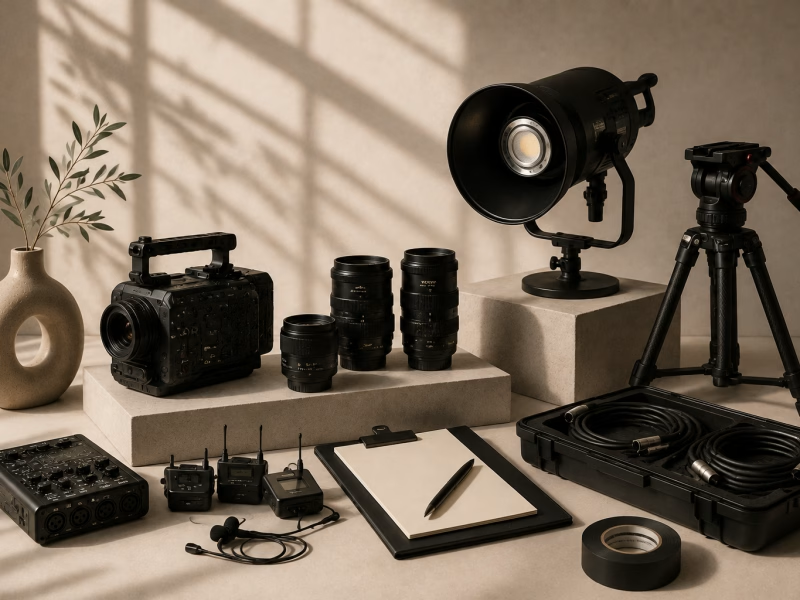
Video Shooting Equipment Kit: What’s Actually in a Professional Bag
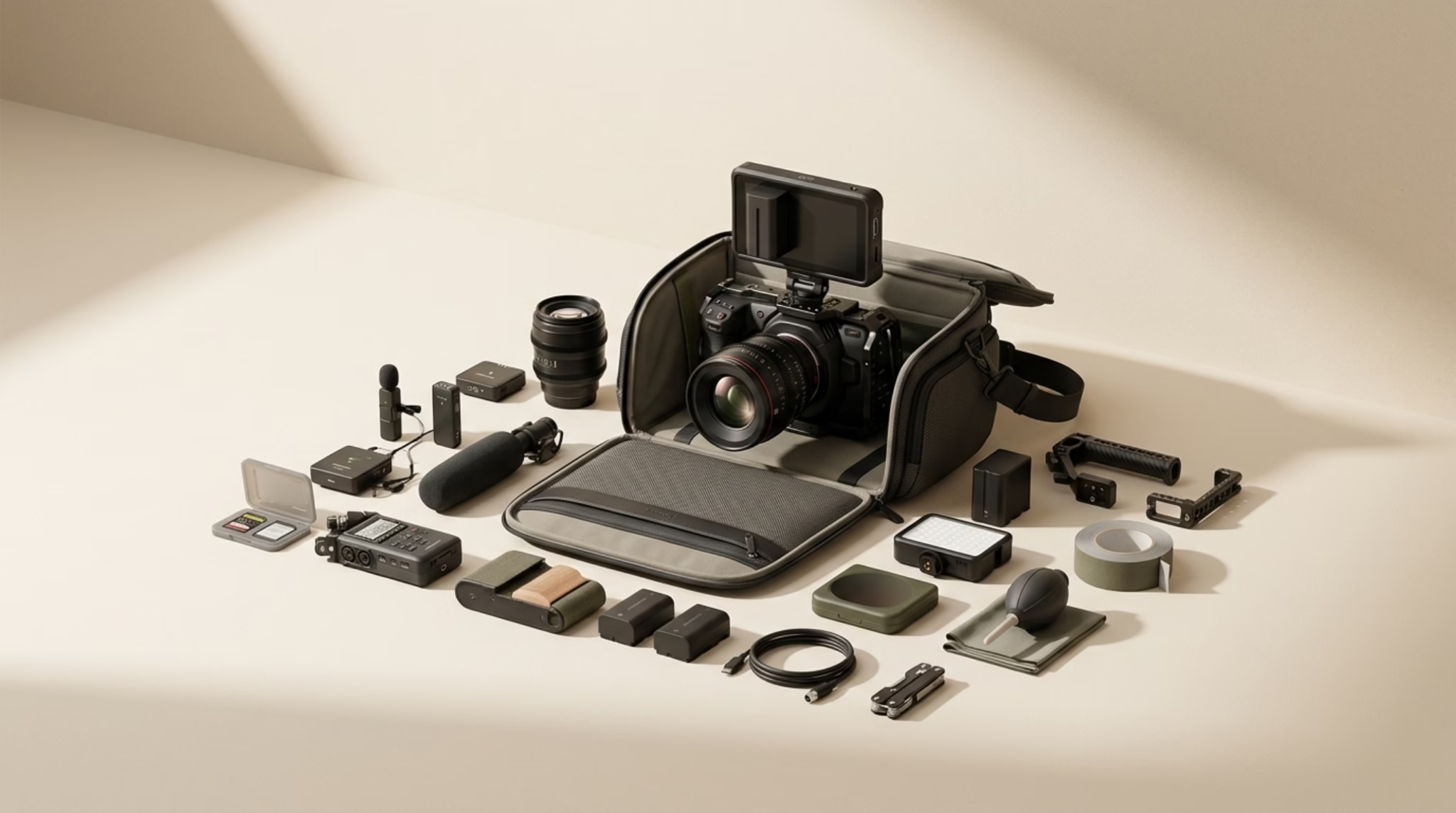
A video shooting equipment kit looks impressive from the outside, but most of what actually makes a professional bag work has nothing to do with the camera sitting on top. Cables, spare batteries, a properly rated mic stand, and a case that survives being dropped matter just as much as the glass and sensor everyone asks about first. This breakdown opens an actual working kit section by section, covering what belongs in each part of the bag and why, rather than a generic list of gear names with no context for how it actually gets used.
- Main compartment: camera body and lens, the part everyone assumes is the whole kit.
- Audio pouch: microphones, stands, and cables that matter more than most buyers expect.
- Support sleeve: tripods and stands, easy to forget when budgeting a first kit.
- Everything else: backups, cables, and a case sturdy enough to protect all of it.
What’s Actually In A Video Shooting Equipment Kit, Bag By Bag
A video shooting equipment kit divides naturally into sections, and understanding those sections separately makes far more sense than treating the whole bag as one undifferentiated pile of gear. Each section solves a different problem, and skipping one usually shows up as a specific, avoidable failure on set.
The adjustable mic stand is a good example of exactly the kind of item that never makes a highlight reel but shows up in nearly every working kit, since audio positioning depends on it as much as the microphone itself does.
Mastermind CC’s rent gear catalog lists day rate pricing across every section of a video shooting equipment kit, which makes it easy to fill a specific gap without committing to a full permanent kit all at once.
Mastermind CC’s studio and gear rentals service builds kits section by section for clients, since a rented camera without matching audio and support gear rarely produces the result a client actually expected.
Is Video Shooting Equipment Kit Price Mostly The Camera Or Everything Else?
Video shooting equipment kit price gets discussed almost entirely as a camera body number, but a genuinely complete working kit usually has as much value sitting in the smaller sections as it does in the main compartment. Audio, support, and backup gear together often approach or exceed what the camera itself cost.
Mastermind CC walks clients through this full picture before quoting a project, and the full range of Mastermind CC’s services reflects how differently a bare camera rental and a fully outfitted kit actually perform on set.
Mastermind CC’s background as a gear access company shapes this advice directly, since the company sees which specific gaps in a kit cause the most avoidable problems during an actual shoot.
Real project work confirms this pattern. Mastermind CC’s project archive and its DevFest Lagos coverage both required a fully outfitted kit, not just a camera, to actually deliver on schedule.
Live events push this hardest. Mastermind CC’s events and live production service cannot afford a missing cable or a dead backup battery mid event, which is exactly why every section of the kit gets checked, not just the camera.
The Main Compartment: Camera And Lens
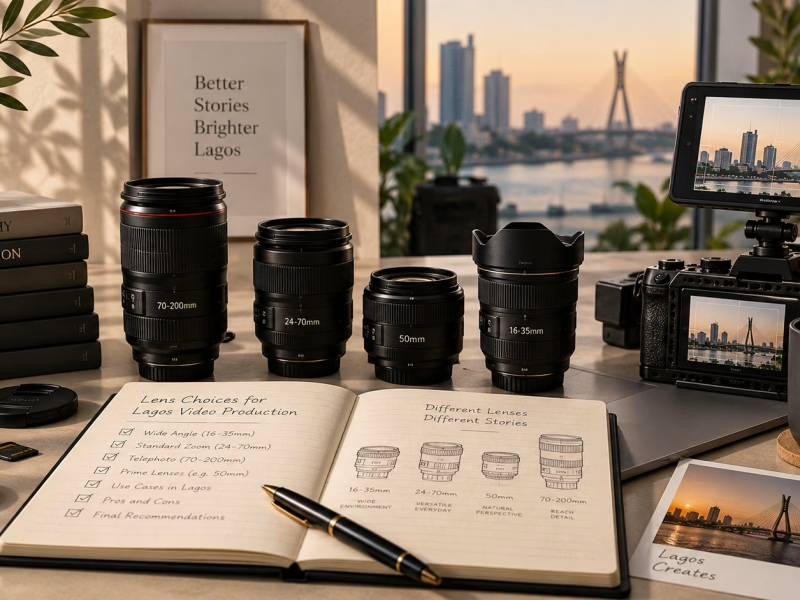
The main compartment holds what most people picture when they hear video shooting equipment kit: the camera body and at least one lens, usually padded separately from everything else in the bag. A second lens, even a modest one, belongs here too, since a single fixed focal length limits what a shoot can actually cover.
- Camera body: padded and positioned to absorb impact if the bag gets dropped.
- Primary lens: usually a versatile zoom covering the most common shooting distances.
- Secondary lens: a prime lens for low light or a longer zoom for distance shots.
- Lens cloths and caps: small, easy to forget, genuinely important for image quality.
The Audio Pouch: Smaller Than It Looks, More Important Than It Seems
The audio pouch takes up a fraction of the space the camera does, yet the gear inside it affects perceived quality more than almost anything else in the bag. A weak audio setup undermines a strong visual setup faster than the reverse.
- Wireless or shotgun microphone: matched to the format, interview versus run and gun.
- Adjustable mic stand: positions the microphone correctly without a hand holding it in frame.
- Windscreen or deadcat: essential for any outdoor or fan cooled environment.
- Spare cables: XLR or TRS, since a single bad cable can end an audio recording entirely.
RØDE’s own product documentation for wireless microphone systems describes exactly the kind of dual channel setups that make it into a working audio pouch, built specifically for interview and multi person formats rather than adapted from a single channel design after the fact.
The Support Sleeve: Tripods, Stands, And What Holds Everything Steady
The support sleeve holds the tripod, and sometimes a second lightweight stand, and this section gets underbudgeted more consistently than any other part of a video shooting equipment kit. A wobbling shot undermines every other piece of gear in the bag at once.
The international standard for camera and tripod mounting threads defines the exact specifications every properly built tripod and camera follows, which is why a rated, standards compliant tripod matters regardless of brand, and why an under-rated one is a real equipment risk, not just a minor compromise.
The Cable And Power Pocket: The Section Nobody Talks About
The cable and power pocket rarely gets mentioned in gear discussions, yet a missing item from this section ends more shoots early than a missing camera feature ever does. This is the section experienced shooters check twice before leaving for any job.
- Spare batteries: at least one full backup for every powered device in the bag.
- Memory cards: more capacity than the job seems to need, formatted and tested beforehand.
- Charging cables and a power bank: for anything that might need a mid shoot top up.
- A small multitool: for the loose screw or stuck latch that shows up eventually.
Studio Equipment Bag: Why Protection Matters As Much As Contents
A studio equipment bag is not just organized storage, it is the first line of defense against the kind of damage that turns a routine travel day into an expensive repair bill. The right bag protects against drops, weather, and rough handling that gear travels through more often than most buyers expect.
Industry protective case standards define specific waterproof and crushproof ratings that a serious studio equipment bag should meet, particularly for the most sensitive or expensive items in a kit, since a bag that fails during travel puts everything inside it at risk at once.
Photo Equipment Vs. Video Shooting Equipment Kit: What Actually Overlaps
Photo equipment and a video shooting equipment kit overlap more than most beginners expect, since a modern hybrid camera body and most lenses do both jobs without needing a separate kit for each. The real differences show up in a small number of specific items, not the whole bag.
- Shared: camera body, lenses, memory cards, and most support gear.
- Photo specific: flash units, light modifiers built for stills, a sturdier photo tripod head.
- Video specific: continuous lighting, external audio gear, gimbal or stabilizer rigs.
Video Blogging Equipment And UGC Video Equipment: The Compact Version
Video blogging equipment and UGC video equipment strip the full kit down to whatever fits in a single small bag or even a large pocket, prioritizing speed of setup over maximum image quality. This compact version still follows the same section logic, just with smaller, lighter versions of each item.
- Compact camera or phone rig: often paired with a small gimbal for stabilized handheld shots.
- Clip on or small wireless mic: audio quality still matters even at this scale.
- Mini tripod: light enough to carry everywhere, sturdy enough to actually hold the camera steady.
Compact gimbal and stabilizer platforms built for exactly this kind of lightweight, mobile shooting have become a standard part of a video blogging equipment kit, since handheld footage without stabilization reads as noticeably less polished than footage with it.
Video Podcast Set Up Equipment And Video Podcast Equipment Kit For 2
Video podcast set up equipment adds a second layer most other video shooting equipment kits do not need: multiple synced audio and video sources running at once rather than a single camera and microphone pair. A video podcast equipment kit for 2 specifically needs matched, not just similar, gear across both positions.
- Two cameras or one multi angle setup: consistent framing and exposure across both hosts.
- Matched microphones: identical or closely matched models avoid an obvious audio mismatch.
- A small mixer or interface: needed once more than one audio source has to combine into one recording.
Video Conferencing Equipment: Why It’s A Separate Bag Entirely
Video conferencing equipment belongs in its own category rather than mixed into a production kit, since it prioritizes reliability and simplicity over the flexibility a shooting kit is actually built for. Consistent industry standards for audio equipment still apply to the microphone half of a conferencing setup, but the camera and lighting side stays deliberately simpler than anything in a full production bag.
A Pre-Shoot Checklist Worth Running Every Time
A short checklist run before leaving for any job catches the specific, predictable gaps that cost time or money once already on location. This takes under five minutes and prevents the majority of avoidable on-set problems.
- Batteries charged and packed: check every device, not just the camera.
- Memory cards formatted: and confirmed empty, not assumed empty from memory.
- Audio tested: a thirty second test recording before leaving, not after arriving on set.
- Tripod plate attached: one of the most common items left behind entirely.
- Cables coiled and accounted for: a missing cable is rarely discovered until it is needed.
- Case latches checked: confirmed closed and secure before the bag moves anywhere.
Building A Kit In Stages Instead Of All At Once
Most working kits were not purchased in one trip, they were built in stages over months or years as specific gaps became obvious through actual use. Trying to buy a complete kit on day one usually means overspending on items that turn out to matter less than expected.
- Stage one: camera, one lens, one microphone, one tripod. Enough to start real work.
- Stage two: a second lens and a proper audio pouch, once the first stage reveals its limits.
- Stage three: backup gear and a proper protective case, once the kit is actually earning its keep.
- Stage four: specialty items for specific formats, added only once that format becomes a regular part of the work.
This staged approach avoids the most common first kit mistake: spending the entire budget on stage one items before discovering which stage two and three items actually matter for the specific kind of work being done. Renting to test stage two and three items before buying them permanently is a reasonable middle step for anyone unsure which direction their work will actually take.
Packing A Kit For Lagos Weather Specifically
Heat, humidity, and sudden rain all affect what actually belongs in a working kit in Lagos, beyond the standard section by section checklist that applies everywhere. A kit built without these local conditions in mind tends to reveal its gaps at the worst possible moment, mid shoot rather than during planning.
- Silica packets: humidity control inside cases, replaced regularly rather than left indefinitely.
- A rain cover or dry bag: packed even on days that start clear, since weather shifts fast.
- Extra lens cloths: humidity fogs glass more often than colder, drier climates ever do.
- A cooling strategy for gear: shade and airflow for equipment left set up between takes.
None of these items are exotic or expensive, which is exactly why they get skipped by kits built from a generic checklist rather than one accounting for the specific climate the gear actually works in day to day.
The Bottom Line
A working video shooting equipment kit is really several smaller kits bundled into one bag: camera and lens, audio, support gear, and backups, each solving a different problem on set. Build it section by section, protect it in a bag rated for real travel, and treat the boring cable and battery pocket with the same seriousness as the camera sitting on top. A video shooting equipment kit built this way rarely fails on the parts that matter most.
Video Shooting Equipment Kit: Quick Answers
What’s the one item people forget most often?
Spare batteries, consistently, since it is easy to assume the current charge will last through an entire shoot. A dead battery mid shoot is one of the most preventable failures on any job.
Does a beginner need every section covered on day one?
No, camera and audio matter most early on, with support and backup sections filled in as budget and experience allow. A partial kit used well outperforms a full kit used carelessly.
Is a compact vlogging kit ever enough for professional work?
For some formats, yes, particularly fast turnaround social content where speed matters more than maximum image quality. More demanding formats still call for a fuller kit.