Studio Gear List: What a Professional Setup Actually Includes
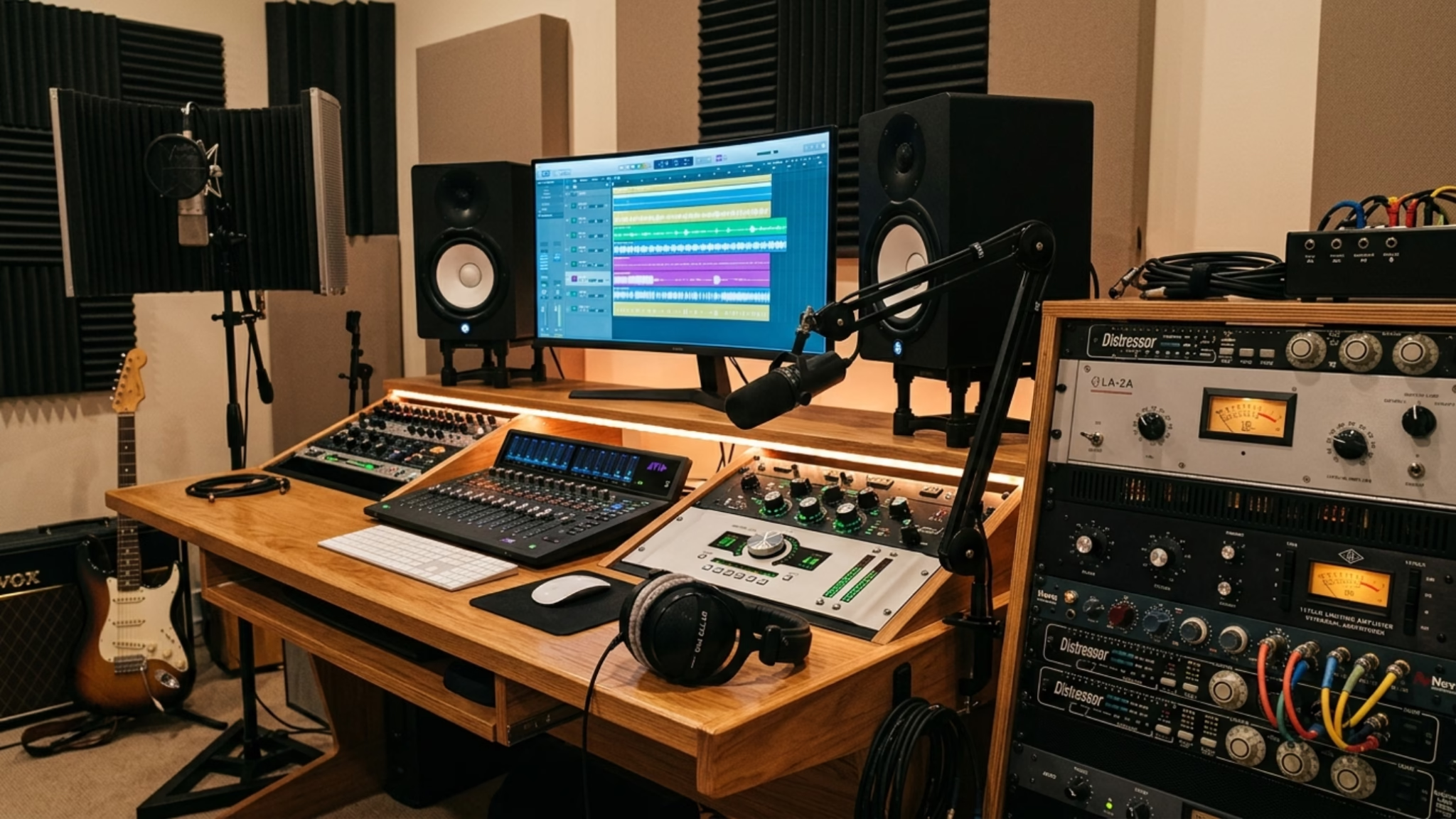
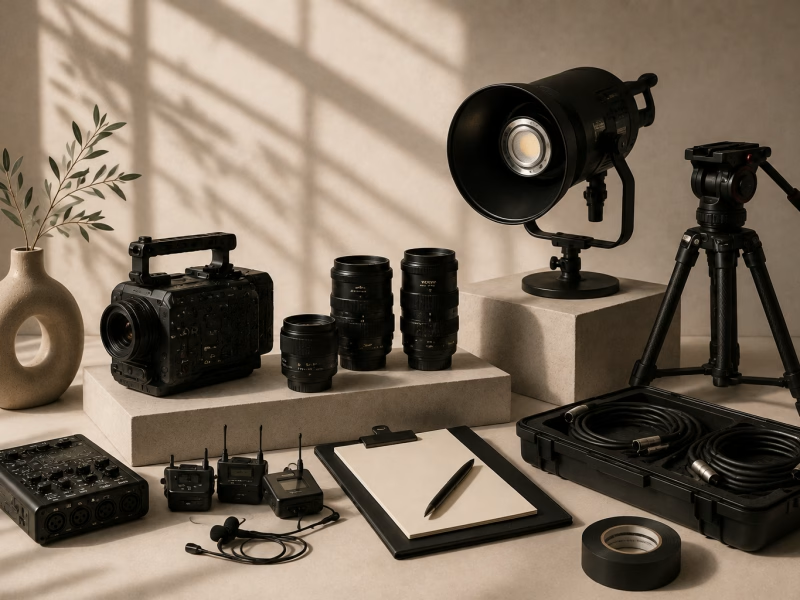
A real studio gear list has four layers: audio capture, video capture, a way to switch and record it all, and the rack or setup that keeps everything organized and safe. Skip any layer and the whole recording suffers, no matter how good the individual pieces are. This studio gear list covers what a working Lagos production studio actually runs, not a wish list of everything on the market.
- Audio core: a production console like the RodeCaster Pro II, plus broadcast quality mics.
- Video core: cameras, a switcher, and reliable capture, not just one webcam.
- The rack: organized, properly grounded, and rated for the gear it holds.
- The plan: buy the core, rent the rest, rather than owning everything outright.
What Belongs On A Real Studio Gear List?
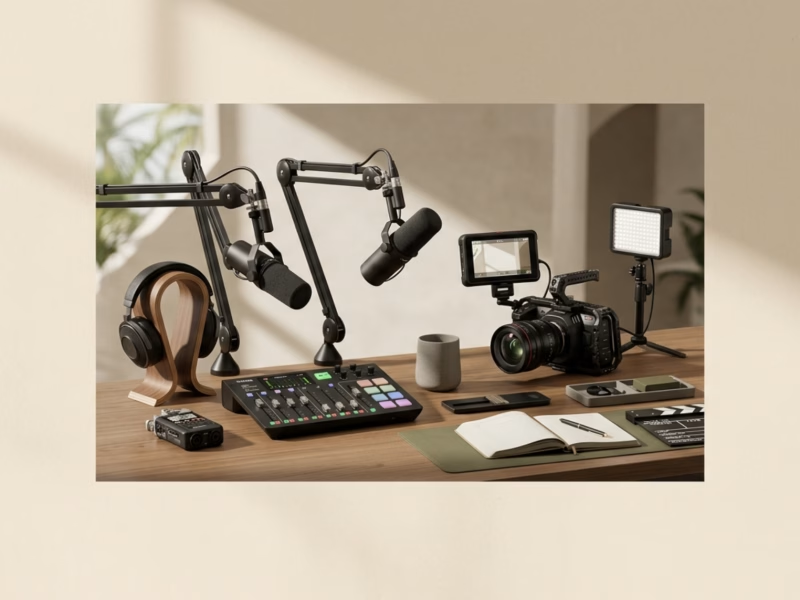
A working studio gear list starts with the audio chain, since bad sound ruins good video but good sound can save mediocre video. That means a real production console, broadcast quality microphones, and headphones for every person in the room, not just the host. Every serious studio gear list starts here, before cameras even enter the conversation.
The console most Lagos podcast studios build around is the RodeCaster Pro II, since it combines mic preamps, a mixer, onboard effects, and multitrack recording into one unit instead of a rack full of separate boxes.
Mastermind CC runs this exact core setup across its Lagos studio spaces, and the studio and gear rentals page outlines what ships as standard versus what gets added per project.
For creators building a studio equipment package on a budget, renting the expensive core piece first makes more sense than buying it outright. The rent gear catalog lists day rate pricing across audio, cameras, grip, lenses, and lighting, so a full studio equipment package can be tested before any of it gets purchased.
Studio Equipment Package Or A La Carte: Which Actually Makes Sense?
A bundled studio equipment package makes sense for a fixed, recurring setup, while a la carte rental makes more sense for one off or growing productions. Most studios end up doing both: a small owned core, with everything else rented per project as needs change.
Mastermind CC’s own history shows the pattern. The company’s about page describes starting in Lagos with a plan to scale gear access across Africa, which only works if most of the fleet stays flexible rather than locked into one fixed studio equipment setup.
Portfolio work backs this up in practice. Mastermind’s project archive and its DevFest Lagos coverage both involved gear configurations that changed by event, proof that a fixed studio equipment package rarely survives contact with a real production calendar.
Live events push this further than studio work does. Mastermind’s events and live production service runs a much larger, temporary studio equipment setup for a single day than any permanent studio would ever keep on a shelf, which is exactly the kind of gap rental exists to fill.
The full range of what a studio can call on spans far beyond a single gear list, from storytelling and events to campaigns, but the equipment layer underneath all of it follows the same buy the core, rent the rest logic.
Room treatment matters as much as any single piece of equipment, and it rarely makes anyone’s shopping list. Bare walls and hard floors bounce sound back into every microphone, adding a hollow, echoey quality no amount of post production editing fully removes. A handful of acoustic panels or even thick curtains and a rug can meaningfully tighten recorded audio before a single dollar goes toward better microphones.
Studio Equipment Setup: Getting The Audio Core Right
A correct studio equipment setup routes every microphone through balanced XLR into the console before anything gets touched digitally. Skipping this step for a cheaper USB-only microphone setup is the single most common quality mistake in a new home or small studio.
RØDE’s own documentation for the console walks through gain staging and channel routing in detail, since getting input levels right at the source matters more than any plugin applied afterward.
The balanced XLR standard behind that setup is not arbitrary. The Audio Engineering Society’s published standards define the pin layout and electrical characteristics every professional microphone and console follows, which is why gear from different manufacturers reliably works together in the same rack. It is also why a studio gear list built around any single brand rarely locks a studio into that brand forever.
Laying every category out side by side makes the full studio gear list easier to plan around, rather than discovering gaps mid production.
Studio Gear List By Category
| Category | Core Item | Notes |
| Audio | Production console (e.g. RodeCaster Pro II) | Mixer, preamps, and recorder in one unit |
| Audio | XLR dynamic microphones | One per speaker, plus headphones for monitoring |
| Video | Mirrorless or cinema camera | At least two angles for interviews |
| Video | HDMI switcher | Cuts between cameras live, records the program feed |
| Support | Rack or cart | Organizes and protects the whole chain |
| Support | Cable management | Reduces noise, trip hazards, and setup time |
Studio Equipment Rack And Studio Gear Rack Mount: Why Cable Management Matters
A studio equipment rack is not just tidy shelving, it is what keeps power, signal, and heat properly separated in a working studio. A studio gear rack mount arrangement done poorly creates hum, overheating, and tripping hazards that a clean rack avoids entirely.
Federal workplace electrical guidance requires electrical equipment to be installed in what it calls a neat and workmanlike manner, with conductors racked for ready and safe access, language written for industrial settings but directly applicable to a studio rack carrying real current and real people working near it daily.
The Video Side: What Rounds Out A Studio Gear List
Video completes a studio gear list once the audio chain is solid, and the two most common gaps are camera angles and a way to switch between them live. A single locked off camera works for a quick clip, but any real interview format needs at least two angles cut together. No studio gear list is finished without this piece, even in a small two person setup.
A compact HDMI switcher handles that cutting live, recording a clean program feed instead of forcing every angle change into a slow post production edit, which matters most for studios recording multiple episodes back to back in one day.
Studio Gear Hire vs. Studio Equipment For Rent: Same Idea, Different Search
Studio gear hire and studio equipment for rent describe the exact same service, just phrased differently depending on region and habit. Both terms point to renting equipment by the day or project instead of buying it outright.
Microphone specific documentation from major manufacturers is worth checking regardless of whether a mic is owned or hired, since proper polar pattern and gain settings affect recording quality the same way either way.
Is A Studio Equipment List PDF Actually Useful?
Yes, a studio equipment list pdf is useful mainly as a checklist and insurance record, not as marketing material. A written list with serial numbers and condition notes protects both a renter and a studio when gear changes hands.
Keeping a studio equipment list pdf updated after every rental or purchase avoids the more common problem: discovering a missing cable or adapter mid shoot instead of before it, when there is still time to grab a replacement.
The Bottom Line
As of 2026, a solid studio gear list still comes down to the same four layers: audio capture, video capture, a way to switch it live, and a rack that keeps it all safe and organized. Build or rent the audio core first, add video once that is solid, and keep a written record of everything that moves in and out of the room. Get those basics right and everything else, from lighting to backdrops, becomes a much easier decision.
Studio Gear List: Quick Answers
What is the single most important item on a studio gear list?
The audio production console is usually the single most important item, since it affects every recording regardless of camera quality. Video can be fixed or reshot more easily than a bad audio take.
Should a new studio buy or rent its first gear list?
Renting first is usually smarter, since it reveals which gear actually gets used before money goes into permanent ownership. Many studios never fully switch to owning everything, and that is a reasonable long term choice.
Does a home studio need the same gear list as a professional one?
Not the full list, but the same four layers still apply at a smaller scale: audio, video, switching, and safe organization. A smaller version of each layer still beats skipping one entirely.