Video Camera Tripod Stands: What to Actually Look For
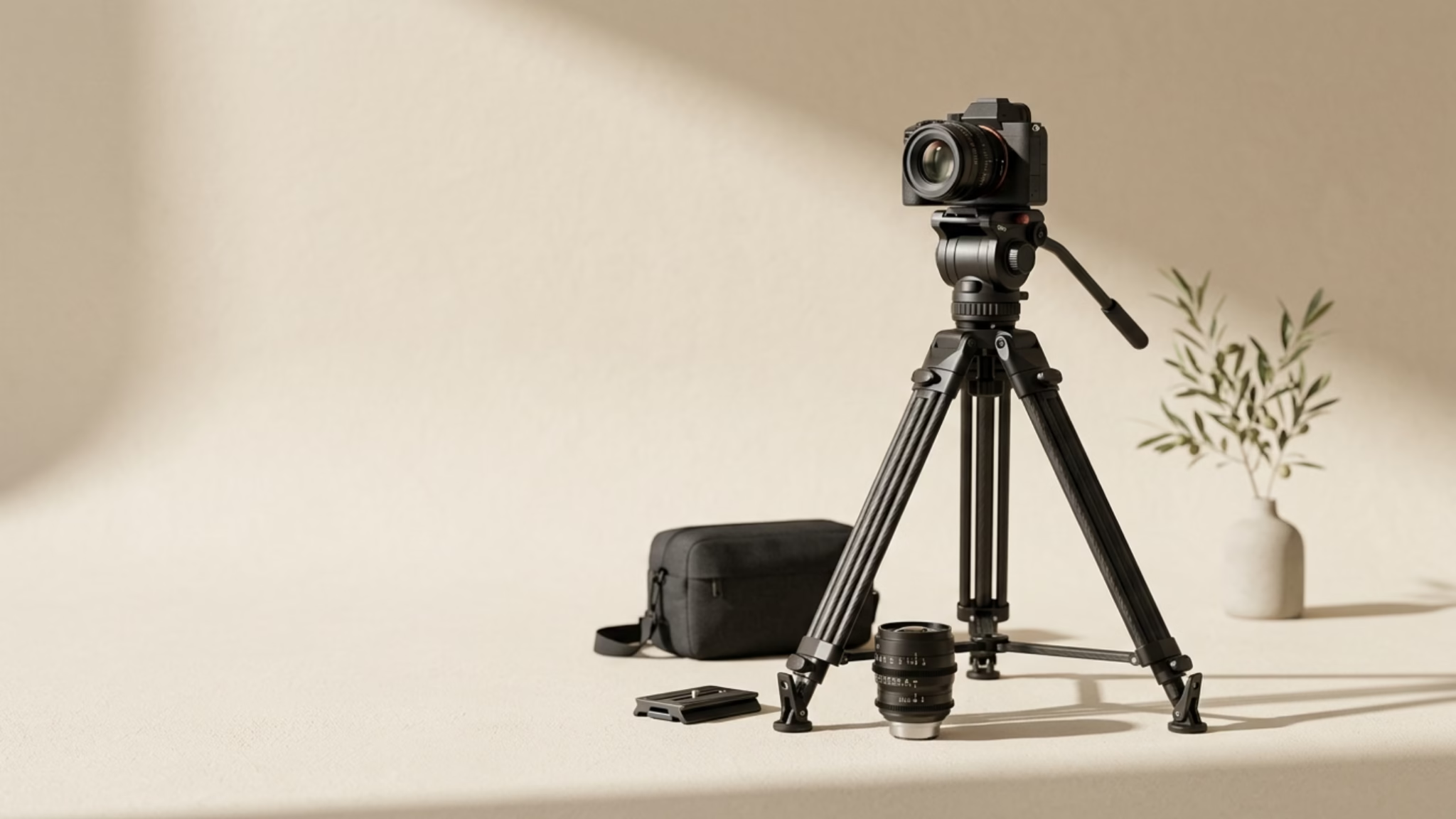
A video camera tripod stand lives or dies on three things: payload rating, head type, and leg stability, in that order. Everything else, from carbon fiber legs to fancy quick release plates, is a nice upgrade layered on top of those three basics. This guide covers what actually determines whether a video camera tripod stand holds a shot steady or lets it drift.
- Payload rating: buy for your heaviest realistic camera and lens, not your current lightest one.
- Head type: fluid heads for smooth pans, ball heads for fast repositioning between shots.
- Leg stability: more leg sections mean more portability but less rigidity under load.
- Not the same tool: a C-stand supports lights and backdrops, not a camera in most setups.
What Actually Matters In A Video Camera Tripod Stand?
A video camera tripod stand needs a payload rating that comfortably exceeds the heaviest camera and lens combination it will ever hold. Buying to match today’s lightweight mirrorless body, then upgrading to a heavier cinema camera later, is the single most common mistake first time buyers make. This one piece of video equipment gets more wrong purchases than almost any other item on a shoot.
A related but different piece of studio equipment is the C-stand, which supports lights, flags, and backdrops rather than a camera. Confusing the two leads to buying the wrong item entirely, since a C-stand has no camera mounting plate or fluid head at all.
Mastermind CC’s rent gear catalog lists day rate pricing on both camera support and grip equipment side by side, which makes the distinction obvious once the two categories sit next to each other on the same page.
Mastermind CC’s studio and gear rentals service outlines which tripods and heads ship as standard with a booking, since the right video camera tripod stand for an interview setup rarely matches what a run and gun shoot actually needs.
Fluid Head Or Ball Head: Which Video Camera Tripod Actually Needs Which?
A fluid head suits a video camera tripod built for smooth pans and tilts, while a ball head suits fast repositioning between static shots. Using a ball head for a slow tracking pan produces visibly jerky motion that a fluid head avoids by design. Picking the right video camera tripod stand for the job starts with this one decision.
Mastermind CC stocks both head types across its rental fleet, and the full range of Mastermind CC’s services reflects how differently a documentary shoot and a product photography session actually use a tripod head.
Mastermind CC’s background as a gear access company rather than just a studio means its recommendations come from what actually breaks or underperforms in the field, not a spec sheet.
Portfolio work makes the difference concrete. Mastermind CC’s project archive and its DevFest Lagos coverage both required fast head swaps mid event, proof that owning one tripod head type rarely covers every real shoot.
Live events push this hardest. Mastermind CC’s events and live production team often runs multiple tripods with different heads simultaneously, since a single event can require both locked off wide shots and smooth handoff pans within the same hour.
Video Camera Types And Why They Change What Tripod You Need
Different video camera types put very different demands on a tripod, well beyond simple weight. A compact mirrorless body barely stresses a lightweight tripod, while a shoulder rig cinema camera needs a heavier, more rigid stand just to stay level during a slow push in.
Manfrotto’s own tripod head lineup splits clearly along these lines: fluid video heads built for content creators and documentary shooters, and heavier duty heads built for cinema cameras with rigs, matte boxes, and follow focus units attached.
Tripod Features By Use Case
| Use Case | Head Type | Priority |
| Interviews and talking head video | Fluid head | Smooth, controlled pans |
| Run and gun documentary | Lightweight ball head | Fast repositioning, low weight |
| Cinema and rig based cameras | Heavy duty fluid head | High payload, stability under rig weight |
| Vlogging and mobile content | Compact travel tripod | Portability over payload |
| Product and studio photography | Geared or ball head | Precise, repeatable framing |
C-Stands vs. A Video Camera Tripod Stand: Not The Same Tool
A C-stand and a video camera tripod stand solve different problems, even though both fold up and stand on three legs. A C-stand holds lights, reflectors, and backdrops steady under grip arms, while a video camera tripod stand holds a camera steady through motion, framing, and repeated setup changes.
The screw connection at the top of a real tripod head is not arbitrary either. The international standard for camera and tripod connections specifies the exact thread dimensions manufacturers follow, which is why a camera plate from one brand generally fits a tripod head from a completely different one.
Video Camera Digital Weight: Why Payload Rating Actually Matters
A modern video camera digital body plus lens, monitor, and microphone routinely weighs more than the camera alone ever suggests. Rigged out with accessories, a compact mirrorless setup can easily double its bare body weight, which is exactly what payload ratings on a video camera tripod stand exist to account for.
Manufacturer documentation on payload safety outlines formal reference practices for rating tripod heads accurately, since an underrated head risks slow creep or sudden drop under a camera it was never tested to hold.
Building A Real Video Shooting Equipment Kit Around Your Tripod
A video shooting equipment kit built around one solid tripod outperforms a bag full of cheap, mismatched accessories. Quick release plates, a spare Allen key, and a padded case protect the investment far more than a second, lower quality tripod would.
Industry standards bodies that govern broadcast and cinema production exist precisely because consistent, reliable equipment across a video shooting equipment kit is what makes multi camera, multi crew productions actually work together on set.
Video Camera Cheap Options: Where It’s Safe To Cut Corners
A video camera cheap tripod is a reasonable choice for light mirrorless bodies and casual content, but a false economy for anything heavier. The payload rating printed on a budget tripod is rarely tested as rigorously as a professional brand’s rating, which matters most exactly when a shot cannot be reshot.
Legs and center columns are the safest place to save money, since a slightly less refined leg lock still holds a camera steady. The head is the worst place to cut corners, since a cheap head is where drift, sag, and sudden slips actually show up on camera.
Video Blogging Equipment: Different Priorities Than Cinema Work
Video blogging equipment prioritizes weight and speed of setup over raw payload capacity, which is the opposite priority order from cinema work. A vlogger moving locations every few minutes needs a tripod that collapses in seconds, not one rated for a rig heavier than most vloggers ever carry.
Rack safety still matters even in a light travel setup. Federal workplace equipment guidance calls for equipment to be installed and secured in a workmanlike, stable manner, a standard written for industrial settings but a fair baseline for any tripod set up in a public space around bystanders.
Finding Video Production Near Me: Rent Before You Buy
A video production near me search is often the fastest way to test a video camera tripod stand before committing to buying one outright. A day of rental reveals whether a head type actually suits a specific shooting style far better than a spec sheet or a five star review ever could.
Renting first also protects against the most expensive mistake: buying a tripod rated for today’s camera, then needing a second one within a year once the camera or rig changes.
The Bottom Line
As of 2026, a good video camera tripod stand still comes down to payload rating, head type, and leg stability, in that order of importance. Buy or rent for the heaviest realistic setup, match the head type to the actual shooting style, and never assume a C-stand can substitute for a real video camera tripod stand when a camera is involved.
Video Camera Tripod Stand: Quick Answers
What payload rating should a beginner look for?
A beginner should look for a payload rating at least twice the weight of their current camera and lens combination. That headroom covers future lens upgrades and accessories without needing a second tripod purchase.
Can a C-stand double as a camera tripod in a pinch?
Not safely, since most C-stands lack a proper camera mounting plate and fluid or ball head. Improvised mounting risks the camera slipping or the stand tipping under uneven weight.
Is a fluid head worth the extra cost over a basic tripod head?
Yes for any video work involving pans or tilts, since a fluid head is the single upgrade that most visibly improves footage quality. For still photography alone, a simpler ball head is usually sufficient.