Podcast Kits Compared: What’s Actually Worth Buying vs Renting
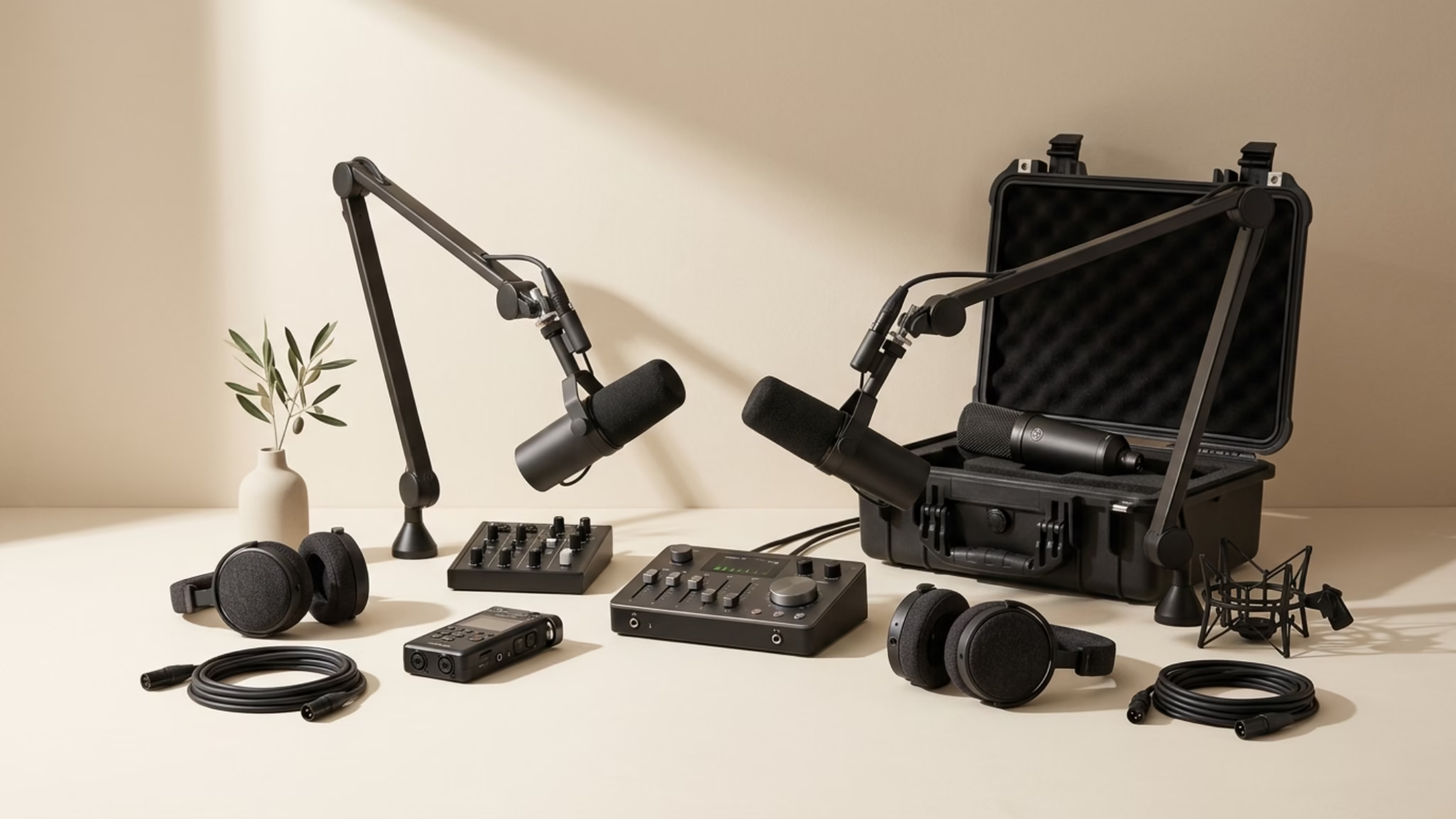
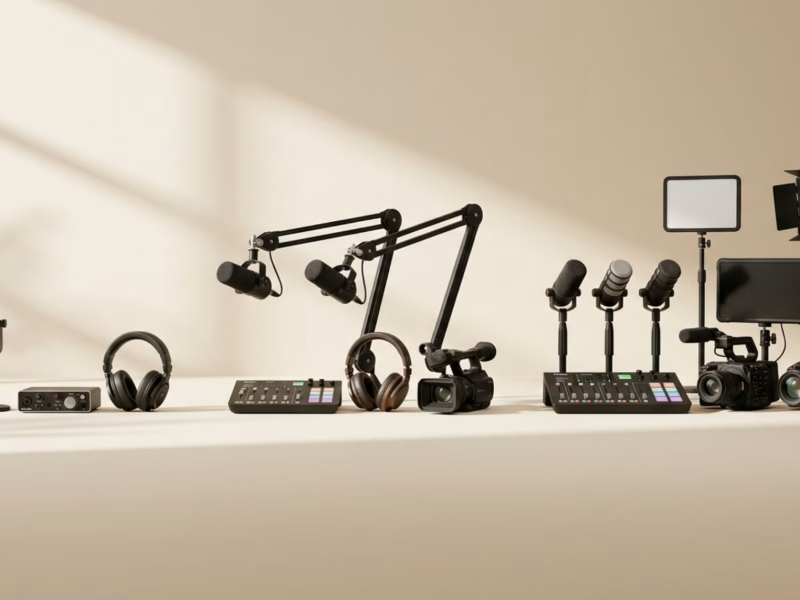
A podcast kit is rarely an all-or-nothing purchase, even though most gear guides present it that way. Some pieces of a podcast kit make sense to own from day one, since they get used every single episode regardless of format. Others make far more sense to rent, especially anything tied to a specific format, a single event, or a video upgrade being tested rather than committed to. This breakdown goes item by item through a typical podcast kit, sorting what earns its keep as a purchase from what should stay a rental.
- Always worth owning: microphones and headphones, used identically every episode.
- Usually worth renting: cameras, lighting, and anything tied to a specific video format.
- Depends on volume: the console or interface, worth owning past a certain episode count.
- Rarely worth buying at all: post production help, better hired per project than staffed full time.
What Belongs In A Real Podcast Kit?
A real podcast kit covers four layers: capture, monitoring, recording, and backup, and most beginner kits skip at least one of them entirely. Skipping backup specifically is the mistake that turns a single equipment failure into a lost episode instead of a minor inconvenience.
The Layer Most Kits Get Wrong
A two person interview format has its own specific gear demands. The RODE Wireless GO II is a good example of gear built for exactly this: a dual channel wireless system designed for two person interviews, meaning a video podcast equipment kit for 2 does not need two entirely separate wireless systems, just one properly matched pair.
RØDE’s own announcement for the system describes it as handling two person interviews, vlogs, and podcasts in a single dual channel receiver, exactly the kind of purpose built design that removes the need to buy duplicate single channel gear for a two person show.
Mastermind CC’s rent gear catalog lists day rate pricing across every layer of a podcast kit, which makes it easy to test an upgrade before committing to buying it outright.
Mastermind CC’s studio and gear rentals service pairs core podcast production equipment with format specific extras, so a video upgrade for a handful of episodes does not require a permanent purchase.
Podcast Production Kit Or Just A Console: What Actually Needs Buying First?
A podcast production kit almost always starts with the audio console or interface, since it is the one piece every other component connects through regardless of format. Buying this first, correctly, avoids the common mistake of upgrading microphones before fixing a weak signal chain underneath them.
Where Mastermind CC Draws The Buy Line
Mastermind CC recommends owning the console once episode volume passes roughly weekly recording, and the full range of Mastermind CC’s services reflects that exact threshold in how bookings get structured for regular versus occasional clients.
Mastermind CC’s background as a gear access company shapes this recommendation directly, since renting the console for an occasional show costs far less over a year than owning one that sits unused most weeks.
Real project work confirms this pattern. Mastermind CC’s project archive and its DevFest Lagos coverage both used rented consoles for one-off recordings rather than committing budget to permanent hardware for a single event.
Live events make the rental case obvious fastest. Mastermind CC’s events and live production service rents specialty podcast production equipment for one-off live recordings rather than stocking gear that would sit idle between events.
Podcast Kit Item By Item: Buy Or Rent?
Breaking a podcast kit into individual items makes the buy or rent decision far clearer than treating the whole kit as one bundled choice. The table below covers the core items most shows actually need.
Podcast Kit: Buy vs. Rent By Item
| Item | Buy Or Rent | Why |
| Microphones | Buy | Used identically every episode, regardless of format |
| Headphones | Buy | Low cost, personal fit matters, used constantly |
| Console or interface | Buy once weekly or more | Core signal path, worth owning past a volume threshold |
| Camera | Rent | Format specific, changes faster than audio gear |
| Lighting | Rent | Only needed for video episodes, rarely used weekly |
| Backdrop or set | Rent | Easy to update per season without storage cost |
The math behind this split holds up over a full year, not just a single episode. A rented camera and lighting setup used for eight video episodes across a year typically costs less than a single mid range camera purchase, before even accounting for the lens, storage, and eventual replacement cycle that ownership also brings. Microphones and headphones flip that math the other way, since the same pair gets reused fifty or more times a year with essentially no ongoing cost once purchased.
Podcast Production Equipment For Video: Where Buying Gets Riskier
Podcast production equipment aimed at video specifically depreciates and updates faster than pure audio gear, which makes buying a riskier bet unless video is a permanent, weekly format decision. Renting a camera and lighting for a video test run costs a fraction of buying, then discovering the format does not stick.
Video podcast equipment for sale online varies wildly in actual quality behind similar looking listings, which is exactly why testing through rental first, before searching for video podcast equipment for sale to buy outright, protects against an expensive mismatch.
Podcast Audio Production: Why This Layer Rarely Changes
Podcast audio production fundamentals change far less often than video trends, which is exactly why the audio layer of a podcast kit tends to reward ownership more than the video layer does. A good microphone from several years ago still performs the same job today, unlike a camera sensor that ages out of relevance faster.
Industry standards for audio equipment reflect this stability directly, since balanced XLR connections and core signal chain principles have remained consistent for decades, which is exactly why podcast audio production gear holds its value and usefulness longer than video gear does.
Podcast Creation Platforms: The Software Side Of The Kit
Podcast creation platforms handle hosting, distribution, and analytics, a completely separate layer from the physical podcast kit covered so far, and one that costs a monthly fee rather than a one time purchase. No amount of hardware substitutes for choosing the right hosting platform for actual distribution.
Industry technical guidelines for podcast measurement define exactly how downloads, audience, and ad delivery get counted across podcast creation platforms, standards that exist precisely because inconsistent counting between platforms used to make audience numbers impossible to compare fairly.
Podcast Post Production: What Actually Happens After Recording
Podcast post production covers editing, noise cleanup, and mixing, the stage most new podcasters underestimate until their first rough recording needs real cleanup work. A well recorded episode still needs structured editing before it sounds ready to publish.
Modern tools have changed part of this workflow. Adobe’s own release notes for its editing tools describe AI assisted features like automated media search and generative extend that speed up podcast post production specifically, though they still require a trained editor directing the process, not a fully automatic fix.
Podcast Producer Rates: Is Hiring Help Worth It?
Podcast producer rates vary by scope, but hiring per episode or per project almost always beats the cost of a full time hire for most independent shows. A skilled freelance editor or producer can turn around a single episode faster than most hosts can while also running their own show.
Federal wage data for the closest matching occupation puts the median annual wage for film and video editors at just under $71,000, a useful benchmark for sanity checking whether a quoted podcast producer rate for freelance or per-project work sits in a reasonable range.
The Bottom Line
As of 2026, a smart podcast kit mixes ownership and rental deliberately: buy the audio core that gets used every episode, rent the video and specialty layers that change by format or season. Sort each item on that basis before buying anything, and treat post production help as a per-project hire rather than a fixed cost until volume actually justifies otherwise. The right kit is the one built around actual usage, not a wish list.
Podcast Kit: Quick Answers
What’s the single most important item to buy first?
A good microphone, since audio quality affects listener retention more than any other single factor in a podcast kit. Video and specialty gear can wait until the format is proven.
Should a two person show buy two full wireless systems?
Not necessarily, a properly matched dual channel system built for two people often covers the need without doubling up on separate single channel units. Check the specific system’s channel count before assuming more units are required.
Is it worth hiring a producer for a brand new show?
Usually not immediately, most new shows benefit more from proving the format first before adding a paid producer to the budget. Hiring help makes more sense once episode volume or quality demands outpace what a host can manage alone.